Gallery First Date: A Relaxed 90-Minute Plan
Plan an art gallery first date that leaves room to talk, with a simple route, conversation prompts, access checks and an easy exit.
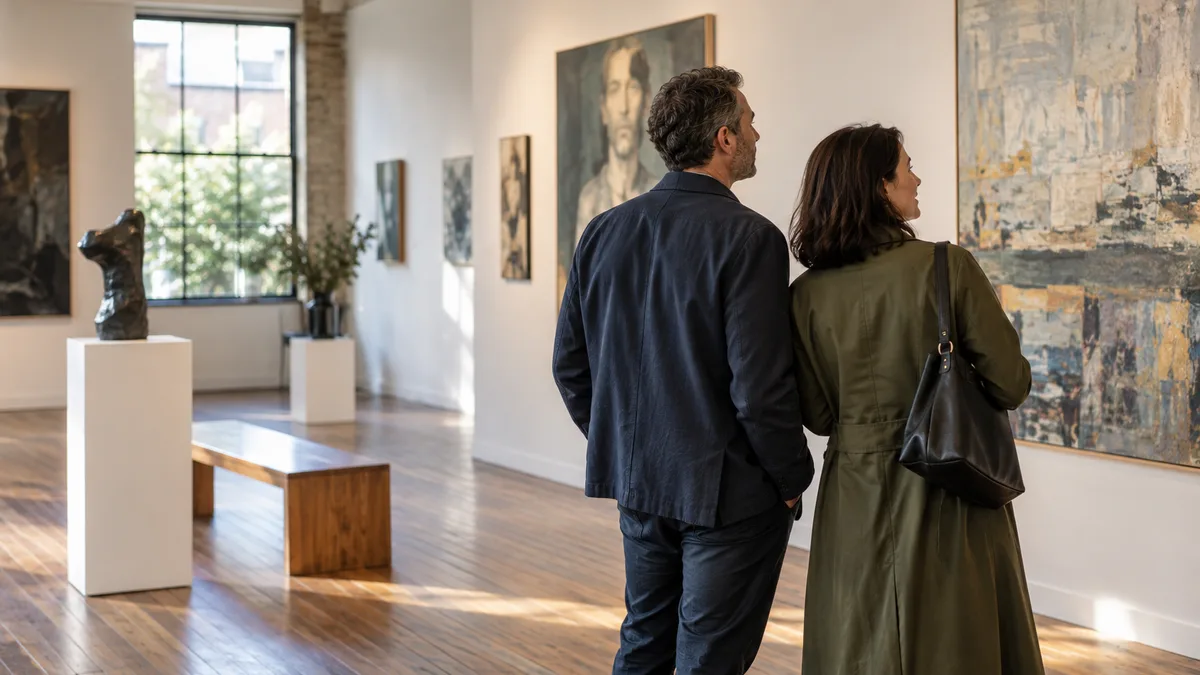
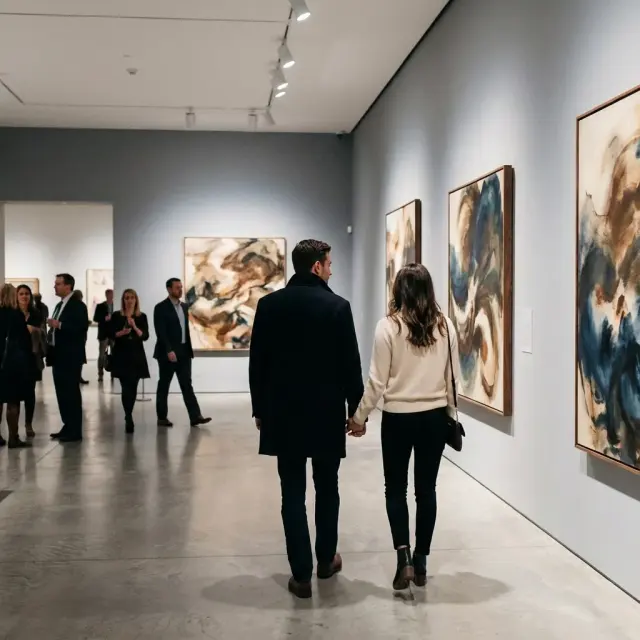
A gallery can be an excellent first-date setting when you want conversation without sitting face-to-face for the entire meeting. The trick is to keep it short, choose a manageable space and agree that the exhibition is a backdrop, not a test of art knowledge.
The plan in one minute
Meet outside a public, easy-to-reach gallery. Spend roughly 45–60 minutes in one exhibition or a few rooms, then leave a 20–30 minute option for coffee. Neither person needs to commit to the second part before meeting.
| Stage | What to do | Why it helps |
|---|---|---|
| Before | Share the entrance and a realistic start time | Nobody has to search for the other person inside |
| First 10 minutes | Choose two or three rooms together | You avoid trying to see everything |
| Middle 30–45 minutes | Stop at a few works that genuinely interest you | Conversation has a natural subject |
| Finish | Ask whether a nearby coffee sounds good | The date can extend or end comfortably |
This is a suggested rhythm, not a timetable. If conversation is flowing, slow down. If one of you wants to leave, you can finish after one room.
Choose the right gallery
- Pick location over prestige. A small local gallery close to transport often works better than a huge museum that requires a long journey.
- Check the actual exhibition. A ticketed show may need advance booking, while a permanent collection may be free. Look at the venue’s own admissions page rather than assuming either.
- Check noise and access. Preview the gallery’s access page for entrances, seating, lifts, toilets and any sensory guidance. Ask your date what would make the visit comfortable without making assumptions.
- Choose a nearby second stop. A café, park or covered market gives you an option that does not depend on the gallery café being open.
For a London example, the National Gallery’s visitor page currently lists free general admission and separate charges for some exhibitions; its access page covers entrances and seating. Check those pages again on the day you book, as arrangements can change.
Conversation prompts that do not feel like a quiz
You do not need to identify artists or explain symbolism. Try one of these, then follow the answer wherever it goes:
- “Which work would you take home if you had to choose one?”
- “What detail did you notice first?”
- “Does this remind you of a place or a memory?”
- “Which room would you come back to?”
Take turns choosing a work. Leave space for quiet looking too. A pause in front of a painting is part of the date, not a failed conversation.
A message you can send
Would you like to meet outside the gallery at 2 on Saturday? We could look around for an hour and get a coffee nearby afterwards if we both feel like it. I’ll check the exhibition and entrance details first.
The invitation names a meeting place, approximate length and optional extension. It also makes the activity easy to decline or adjust.
Common mistakes
- Trying to see the whole collection. Choose a few rooms; the aim is to spend time together.
- Turning the visit into a lecture. Share what you like and ask open questions.
- Assuming all galleries allow photos, bags or sketching. Check the venue’s current visitor rules and follow signs in each room.
- Booking an expensive exhibition as a surprise. Ask first about cost, interest and access needs.
- Planning an isolated walk afterwards. For a first meeting, keep the optional extension in a public place that both people can leave easily.
For the wider museum-date etiquette, read our gallery and museum date guide. If you want other low-pressure settings, compare first-date locations or first dates for introverts. You can also find a date idea that matches your budget and mood.